
Is Hispanic Advertising Important?
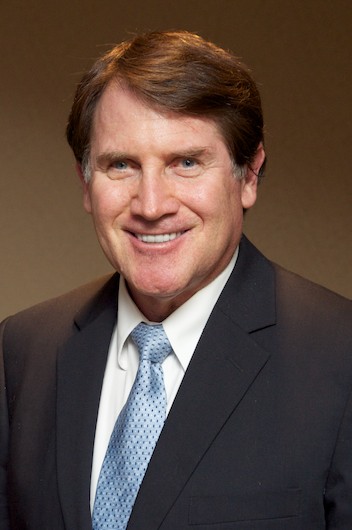 |
|
? I am making a case…to consider Hispanic marketing.? |
|
|
This is a recurring question when every brand manager develops their media plan. Of course brand managers recognize the growth in Hispanics in the United States. The 2010 census shows 43% growth in Hispanics from 2000, mostly from Mexican immigration. The white population grew at only 5%. Most brand people ask whether a dedicated Hispanic effort is worth it because it involves additional creative development and a diversion of media spending to Hispanic networks.
In the past, Hispanic efforts have been high on the cut list when budget crunches inevitably arise. It is seen as a nice to do rather than must do. The reasons given are that many Hispanics watch Anglo television and are bi-lingual in many cases. Creating Hispanic ads requires use of a specialty agency and translators to help regulatory and legal review it. It is seen as a lot of extra work.
That being said, the world for marketers is changing. The Hispanic market cannot just be a nice to do anymore. For drug advertisers who rely on a generally older target, it is not likely these new immigrants will learn English to the level they can understand drug ads. Hispanics now make up 16% of the U.S. population, up from 12% in 2000. In 2020 we should see that number top 20%. The drug marketer with a typical blockbuster of $1 billion or more has a lot of potential with the Hispanic market. Small investments may yield excellent ROI.
It is frequently argued by those who think Hispanic advertising is not needed that they mostly do not have insurance. Hispanics do have insurance coverage at about 70% according to the Office of Minority Health at HHS. Whites are at about 88% covered. While a significant gap exists in coverage, those 70% are covered for branded DTC drugs.
There is also an argument that Hispanics do watch Anglo ads and understand English. While that is somewhat true, the reality is 35% do not speak English and 76% speak Spanish at home(HHS data). While I do not have language spoken by age I assume the percent among 50+ is much higher among those that do not speak English.
There is also a hesitancy to use Hispanic because brand managers are told Hispanics are made up of very different cultures. Mexicans, Latin Americans and Cubans, we hear, see themselves very differently culturally and therefore a blended ad may not work well. That may be true to some extent but I would argue that an American can see a Canadian or Australian ad and easily understand it despite differences in accent and some cultural differences.
Do Hispanic audiences receive health information and diagnosis differently? Yes. They are diagnosed with disease 21% less than whites, according to a Univision study. They discuss side effects with their doctor less than whites at 29% versus 53%. They want a deeper relationship with their doctors than Anglos, this study shows. Since drug companies use DTC to facilitate patient-doctor discussions DTC seems a natural here.
I am making a case for more of a commitment to consider Hispanic marketing. I do not think every brand needs a separate effort but I think most brands would benefit. Drugs need detailed explanations and trying to understand them in a second language is problematic. Most of us do not really understand them in our primary language.
Drug companies should have specialists in diversity marketing which would include Hispanic, African-American, Asian, Russian, Arabic and LGBT. It may be difficult to add staff given the general budget cuts at big pharma. Those few extra people may pay big dividends compared other human capital investments. I have been much more sensitive to Hispanic marketing since my son married a lovely Venezuelan a few years ago. I see how my daughter-in-law relates to her mother who is bi-lingual but prefers Spanish. After a decade here her mother still feels uncomfortable speaking English.
I would argue that any drug company not taking the time to seriously consider a larger Hispanic effort is risking missing a huge opportunity. While in the very long term we can assume assimilation in language, the next few decades should see Spanish as a critical and growing second language of marketing.
On a separate note I have started tweeting at @BobEhrlich_DTC. So if you want some daily rants, observations, ideas then add me to your list. I promise not to tell you everything I do during the day.
Bob Ehrlich, Chairman
DTC Perspectives, Inc.


Comments are closed.